Black Friday Scams in South Africa: How to Spot Them and Shop Safely
Fake shops, fake ads and calls asking for your OTP. How Black Friday scams work, how to check a shop before you pay, and what to do if you've been scammed.

Black Friday Scams in South Africa: How to Spot Them and Shop Safely
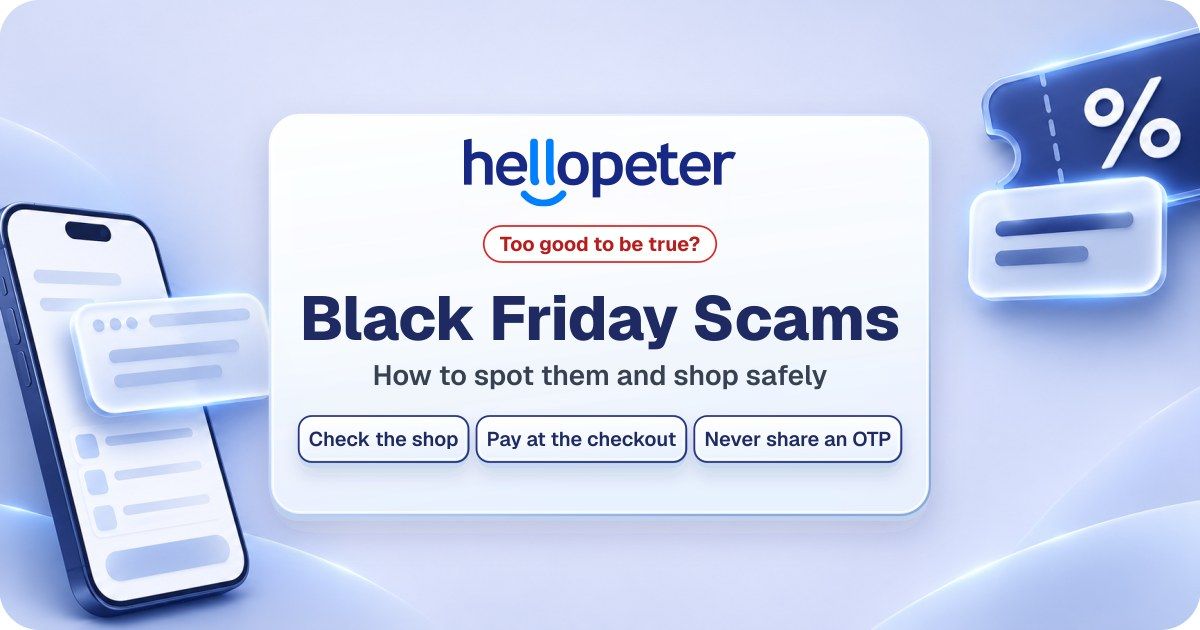
Big deals draw shoppers, and scammers follow. Black Friday scams in South Africa, from fake online stores to calls asking for your OTP, usually work by tricking you into paying or handing over your details. Here's how to spot them, how to pay safely, and what to do in the first hour if you've been scammed.
Why Scams Rise Around Black Friday
SABRIC, the banking industry's crime information centre, expects scams to rise over Black Friday, Cyber Monday and Christmas, and its latest figures show why.
On Hellopeter, Black Friday week 2025 was the busiest week for reviews in the last quarter of the year. In the four weeks after it, negative reviews about couriers nearly doubled compared with October, and those about electronics and retail businesses rose too.
The Most Common Black Friday Scams in South Africa
- Fake shops that copy a real retailer, take your money and send nothing or a counterfeit.
- Fake ads on social media and messaging apps that lead to a fake checkout.
- "Pay by EFT or this link instead" requests that skip the shop's real checkout.
- Bank or courier impersonation by SMS or phone, asking for banking details or an OTP.
- Card fraud in store: swapped cards, skimmers and people watching your PIN.
- Bait deals that look too good to be true.
SABRIC lists all six for the festive season, and warns that cloned voices and deepfake videos made with AI make scams more convincing.
How to Spot a Fake Online Store Before You Pay
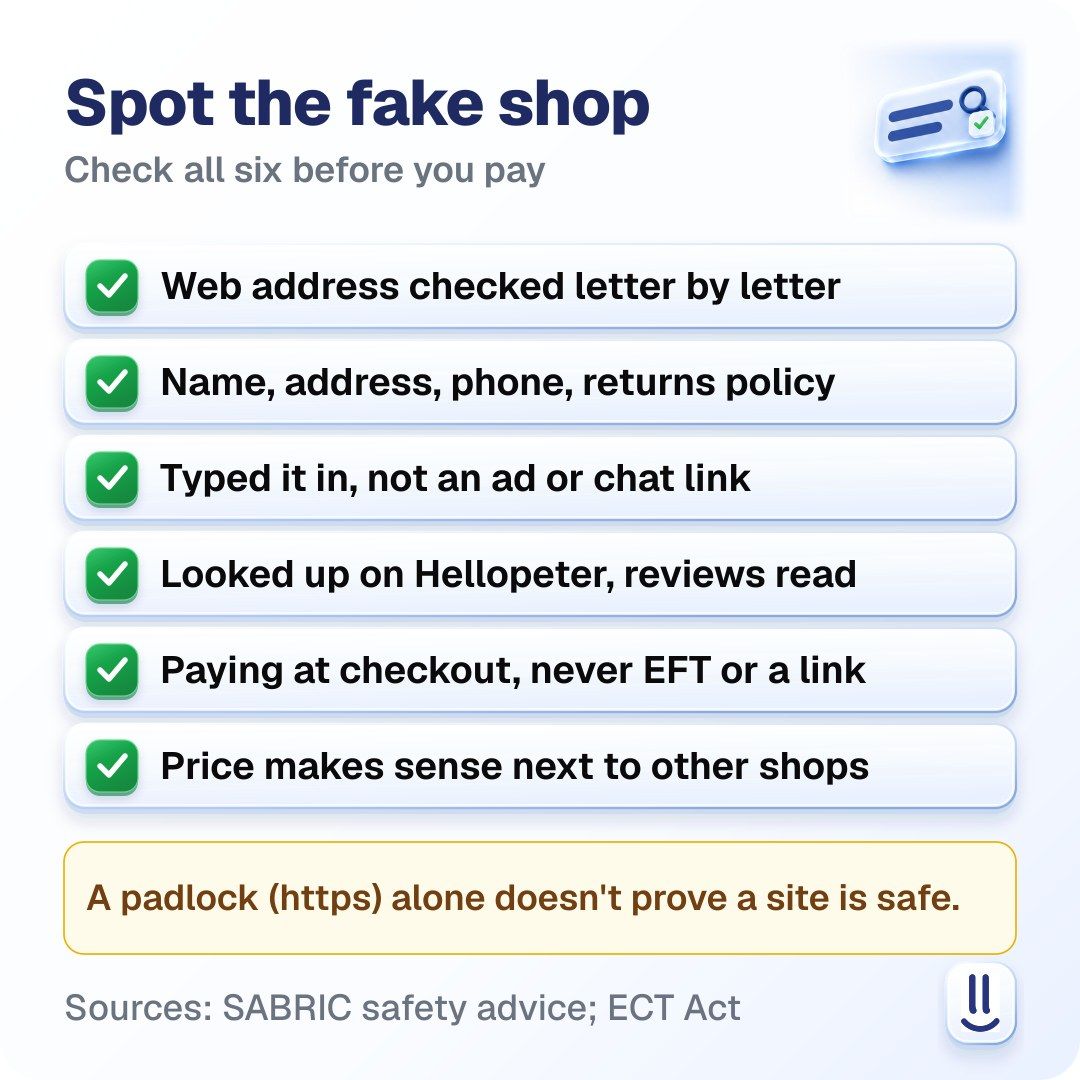
- Type the address yourself and check it letter by letter. SABRIC notes that criminals need to change only one digit of a web address to create a fake site.
- Don't rely on the padlock. SABRIC warns that the "s" in https no longer guarantees a site is secure.
- Look for the shop's details. The Electronic Communications and Transactions Act (ECT Act) requires online shops to show their full name, physical address, phone number and returns policy.
- Compare the price. A deal far below every other shop is a warning sign.
Look the Shop Up on Hellopeter
A Hellopeter profile shows whether the business has claimed it (look for an "Unclaimed Business" badge), whether it replies to reviews, its TrustIndex out of 10, its star rating over the last 12 months, recent reviews and an AI summary.
None of this proves a shop is fake on its own, and honest new shops can have only a few reviews. But if recent reviewers say their orders never arrived, don't pay. Compare stores on our online shopping industry page, or see this check in action in Is Takealot Legit?.
How to Pay Safely
- Pay at the shop's own checkout, never by EFT or a payment link sent in a chat.
- Register your card for 3D Secure, for an extra check on online payments.
- Use a virtual card online, if your bank offers one. Several South African banks have one in their banking app. It has its own card number and a CVV (the three-digit security code) that changes regularly, so you never type in your physical card's details.
- Never share an OTP, PIN or password, whoever is asking. SABRIC says banks will never ask you to confirm confidential information over the phone.
- Keep your card in sight in store. SABRIC has warned about fraudsters posing as promoters who ask for your PIN on a portable card machine.
Even at real shops, getting your money back is the part customers rate as the worst.
Your Rights When a Real Shop Lets You Down
At a genuine online shop, the ECT Act lets you cancel within seven days of receiving the goods, without a reason, and get a refund within 30 days of cancelling. Some items, such as personalised goods, are excluded. Faulty goods can be returned within six months for a repair, replacement or refund under the Consumer Protection Act.
If the shop won't help, take it to the Consumer Goods and Services Ombud for free on 0860 000 272 or at cgso.org.za. Our guides on complaining effectively and escalating to an ombud explain the steps.
Been Scammed? What to Do in the First Hour
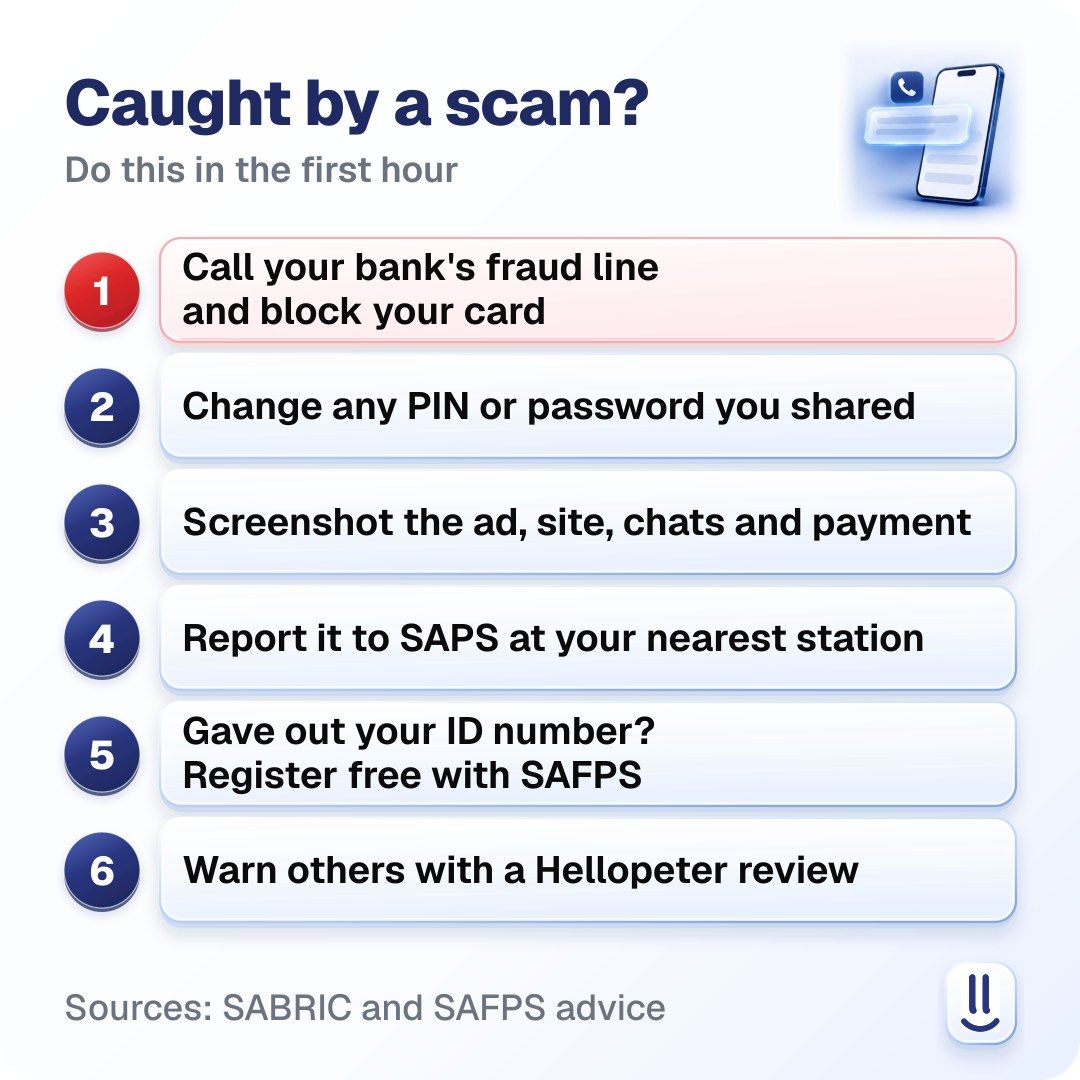
- Call your bank's fraud line straight away, using a number from its official website or app, never one from a message, and ask it to block your card.
- Change any PIN or password you shared, and tell your bank about any OTP.
- Screenshot everything: the ad, the web address, your chats and your proof of payment.
- Report it to the police at your nearest SAPS station.
- Gave out your ID number? Apply for free Protective Registration with the Southern African Fraud Prevention Service, which warns its members that your identity has been compromised.
- Warn the next shopper with a factual review, if the shop is on Hellopeter.
Shop Smart This Black Friday
Most Black Friday scams in South Africa depend on you rushing. Slow down, check the shop and pay only at its own checkout. For more, browse our consumer safety guides.
A Note on This Article
Hellopeter is an independent review platform, not a bank, the police, an ombud or a legal adviser, and isn't affiliated with any business mentioned here. Our figures reflect reviews at the time of publication and change as new reviews come in. Official processes can change, so confirm current steps with your bank. This is general information, not legal or financial advice.